

TL;DR:
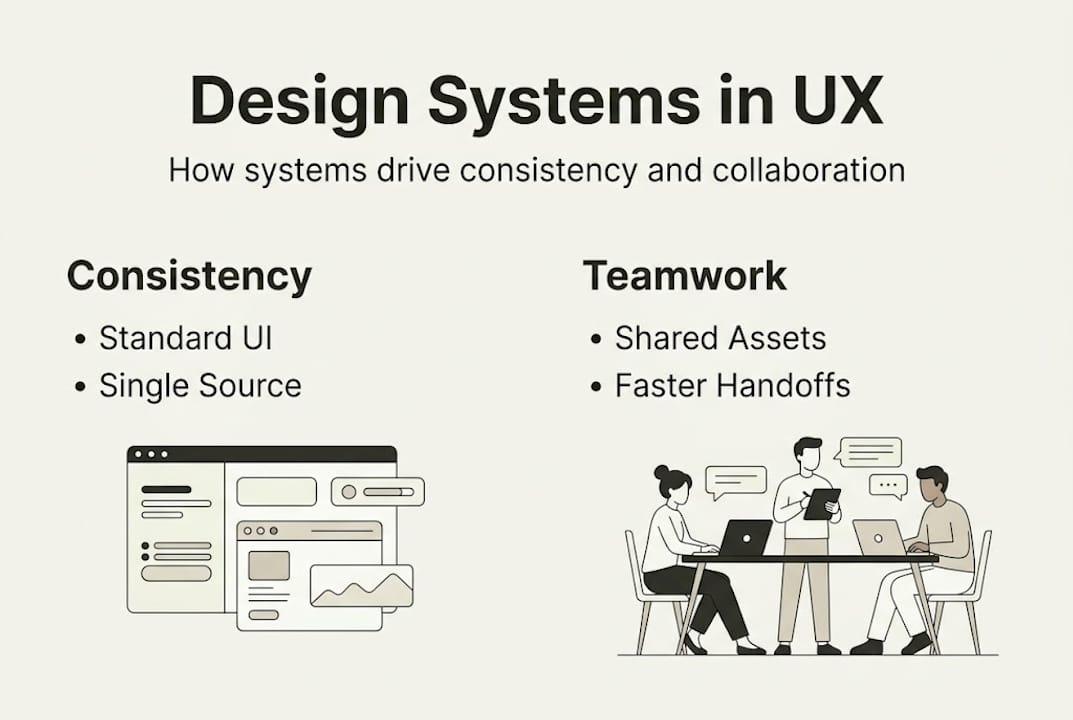
- Design systems serve as a shared, structured framework that ensures product consistency across disciplines.
- They improve collaboration, reduce errors, and accelerate development through reusable components and standardized guidelines.
- Effective governance, phased adoption, and continuous iteration are essential for long-term success.
Design systems are frequently misunderstood as simple digital UI kits or component libraries reserved for front-end developers. In practice, they function as the structural backbone of both digital and physical product development, governing how teams communicate, iterate, and maintain quality at scale. Whether you work in UX, interaction design, or industrial design, the absence of a well-maintained system introduces inconsistency, rework, and costly misalignment. This guide clarifies what design systems actually encompass, how they accelerate collaboration, which methodologies underpin the most effective implementations, and where most teams stumble before achieving real returns.
Table of Contents
- Why design systems matter for UX and industrial designers
- How design systems enhance collaboration and workflow
- Core methodologies: from atomic design to governance
- Common challenges, edge cases, and how to overcome them
- A practical perspective: What most guides miss about design systems
- Ready to level up your design process?
- Frequently asked questions
Key Takeaways
| Point | Details |
|---|---|
| Consistency at scale | Design systems create a single source of truth for brand and UI across teams and products. |
| Collaboration boost | They streamline teamwork by reducing miscommunication and wasted time with shared assets and processes. |
| Flexible frameworks | Proven methodologies balance structure with adaptability, supporting edge cases and evolving needs. |
| Governance is crucial | Strong governance prevents drift and ensures lasting adoption and value. |
| Measured impact | Empirical evidence shows substantial ROI, time savings, and better product quality. |
Why design systems matter for UX and industrial designers
A design system is not merely a collection of buttons and color swatches. It is a structured, living framework that governs how design decisions are made, documented, and applied across every touchpoint of a product, whether digital or physical. For UX designers, this means standardized interface components, interaction patterns, and accessibility guidelines. For industrial designers, it translates into material specifications, form language principles, and manufacturing tolerances that align with brand identity.
At its core, a design system functions as a single source of truth for all design decisions. This means that every team member, from a junior UX researcher to a senior mechanical engineer, references the same approved assets, tokens, and guidelines. The result is a measurable reduction in design drift, the gradual divergence of product elements from their intended specifications.
"Design systems ensure product consistency by providing reusable components, design tokens, guidelines, and patterns that create a single source of truth for UI elements across platforms and teams."
Brand consistency insights research confirms that organizations maintaining robust design systems report significantly fewer inconsistencies across product lines, particularly when scaling to multiple platforms or regional markets. For industrial designers, this principle extends to physical product families where finish, proportion, and interaction paradigms must remain coherent across SKUs.
The main structural elements of an effective design system include:
- Component libraries: Reusable UI or physical design modules with defined states, variants, and usage constraints
- Design tokens: Abstract variables (color values, spacing units, typography scales) that propagate changes system-wide
- Documentation: Usage guidelines, rationale, and edge case instructions for every component
- Governance model: Defined roles, contribution processes, and review cycles that keep the system current
Applying human-centered design tips during system construction ensures that components are built around validated user needs rather than assumed patterns. This foundational investment pays dividends at every subsequent phase of product development.
How design systems enhance collaboration and workflow
Once the structural value of a design system is established, the more transformative benefit becomes apparent: the system fundamentally changes how cross-disciplinary teams operate. Miscommunication between designers and developers, or between UX and industrial design teams, often stems from the absence of shared language and assets. A well-implemented design system eliminates this friction by providing a common reference that all disciplines can interrogate and contribute to.
Shared experience in teams research demonstrates that design systems enhance collaboration between UX designers, industrial designers, developers, and product teams by establishing shared language, reducing handoff friction, and enabling focus on user problems rather than reinventing UI.
The workflow improvements enabled by design systems are measurable and consistent across organizations that adopt them systematically:
- Reduced design-to-development handoff time: Developers reference the same tokens and components already embedded in design files, eliminating ambiguity.
- Accelerated iteration cycles: Teams modify a token or component once; changes propagate system-wide without manual updates.
- Lower defect rates: Standardized components reduce implementation errors introduced by inconsistent interpretations.
- Faster onboarding: New team members reference documentation rather than relying on tribal knowledge.
- Clearer design decision rationale: Documented guidelines reduce subjective debates during review cycles.
The empirical outcomes are compelling. Organizations with mature design systems report 34% faster design cycles, 47% faster development timelines, and 71% fewer interface bugs in production.
| Metric | Improvement with design system |
|---|---|
| Design cycle speed | 34% faster |
| Development timeline | 47% faster |
| Interface bugs in production | 71% reduction |
| Time-to-market | Significantly reduced |
Pro Tip: Resist the urge to resolve every pixel-level detail in system documentation. Invest that energy in documenting user needs, edge cases, and decision rationale. Teams that understand why a component exists adopt it far more consistently than those who only know what it looks like.
Core methodologies: from atomic design to governance
Understanding the collaborative benefits of design systems is only part of the equation. The structural methodologies that underpin effective systems determine whether they scale gracefully or collapse under organizational complexity.

Atomic design, introduced by Brad Frost, provides the most widely adopted structural framework. It organizes interface elements into five hierarchical levels: atoms (basic HTML elements like buttons and inputs), molecules (simple groups of atoms functioning together), organisms (complex UI sections), templates (page-level layouts), and pages (specific instances of templates). This hierarchy enables systematic reuse and predictable scaling. Key methodologies include atomic design, design tokens as foundation, component libraries, documentation with usage guidelines, and governance models.
Governance is where many organizations underinvest. Data on design system approaches indicates that only 44% of teams operate with a formal governance model, leaving the majority vulnerable to system drift and inconsistent contribution quality.
| Governance model | Structure | Best suited for |
|---|---|---|
| Centralized | Single team owns and maintains the system | Smaller organizations, early-stage systems |
| Federated | Multiple teams contribute; central team curates | Large enterprises with diverse product lines |
| Hybrid | Core team sets standards; product teams extend locally | Mid-size organizations scaling across platforms |
Effective documentation, the often-neglected pillar of governance, must include:
- Component purpose and intended use cases
- Accessibility requirements and WCAG compliance notes
- Interaction states (default, hover, focus, disabled, error)
- Responsive behavior specifications
- Known limitations and approved exceptions
Applying research methods for scalable systems during the documentation phase ensures that guidelines reflect actual user behavior rather than theoretical best practices. Without rigorous governance, even the most technically sophisticated design system degrades into an inconsistent collection of legacy components.
Common challenges, edge cases, and how to overcome them
Even well-resourced teams encounter significant obstacles when implementing and sustaining design systems. Recognizing these failure patterns early is essential to avoiding costly remediation.
Edge cases represent one of the most persistent challenges. A component designed for a standard product name may break visually when applied to a 60-character SKU label. Error states designed for English-language interfaces may fail to accommodate right-to-left scripts. Flexible components and phased maturity models address these scenarios by building variation and exception handling directly into component specifications from the outset.
The most common adoption pitfalls include:
- Building too early: Constructing a system before identifying recurring patterns leads to components that solve hypothetical rather than actual problems
- Over-reliance on templates: Teams that treat system components as immutable constraints stifle legitimate design innovation
- Poor or absent documentation: Components without usage guidelines are routinely misapplied, replicating the inconsistency the system was built to prevent
- No designated stewardship: Systems without an owner degrade rapidly as teams modify components without coordinated review
- Accessibility gaps: Research indicates only 21% of teams formally document accessibility requirements within their systems, a significant missed opportunity given regulatory and usability implications
Pro Tip: Validate recurring design patterns across at least three distinct product contexts before formalizing them as system components. Building from observed patterns rather than anticipated ones dramatically increases adoption rates and reduces the need for early-stage refactoring.
"Governance and stewardship are non-negotiable for system longevity. A design system without an owner is a design system in decline."
Applying a design validation workflow before committing components to the system reduces the risk of embedding flawed patterns at scale. Additionally, identifying design trends through ongoing research ensures that systems evolve in response to emerging user expectations rather than calcifying around outdated conventions.
A practical perspective: What most guides miss about design systems
Most guidance on design systems focuses disproportionately on the build phase: selecting tools, defining tokens, and populating component libraries. The more consequential challenge, and the one that determines long-term return on investment, is adoption and iteration.
The teams that extract the most value from their design systems treat them as products in their own right. This means establishing usage metrics, soliciting contributor feedback, running periodic audits, and releasing versioned updates with documented changelogs. A system that no one uses is not a system; it is an archive.
Phased rollout consistently outperforms big-bang launches. Introducing a system incrementally, starting with the highest-frequency components and expanding based on measured adoption, builds organizational confidence and surfaces integration issues before they compound. Design analysis for lasting results reinforces that iterative, evidence-driven refinement produces more durable outcomes than comprehensive upfront specification. Governance and phased adoption are not administrative overhead; they are the mechanisms through which design systems generate compounding value over time.
Ready to level up your design process?
Applying design system principles effectively requires access to validated research, not just practitioner opinion. DesignDex aggregates and distills peer-reviewed studies in UX and industrial design, giving you structured, citation-ready insights that support every stage of system development.
Explore how usability testing research informs component validation, or examine findings on visual communication design to strengthen your system's visual language framework. Whether you are building a system from scratch or auditing an existing one, DesignDex provides the evidence base to justify decisions, align stakeholders, and accelerate outcomes with confidence.
Frequently asked questions
How do design systems support cross-disciplinary teams?
Design systems create a shared language and assets that reduce friction between UX designers, industrial designers, and engineers. By establishing shared language, they align all disciplines with common standards and minimize handoff ambiguity.
What is atomic design in a design system?
Atomic design organizes interface elements into hierarchical levels from simple atoms to complex organisms, enabling systematic reuse and scalability. Key methodologies confirm this framework as foundational to most mature design systems.
How do you prevent a design system from becoming too rigid?
Balance standardization with flexibility by designing components for edge cases and allowing documented exceptions when user needs justify deviation. Component variation and phased maturity models are the primary mechanisms for maintaining this balance.
What are common reasons design systems fail?
Most failures result from poor governance, inadequate documentation, or building before assessing actual team needs. Systems fail without governance, a clear adoption plan, or a needs assessment conducted prior to construction.