

TL;DR:
- Design intelligence integrates ongoing research, data, and ethics into every design decision.
- It transforms designers into behavior, ethics, and impact curators beyond aesthetics.
- Applying structured frameworks ensures evidence-based, behavior-shaping, and ethically aligned designs.
Design is rarely just about how something looks. The most consequential design decisions, from the layout of a hospital wayfinding system to the hierarchy of a mobile checkout flow, are grounded in research, behavioral data, and ethical reasoning. Design intelligence is the discipline that formalizes this reality: it positions designers not as visual stylists but as curators of evidence-based decisions that shape how people think, act, and engage. This article defines design intelligence, demonstrates its measurable impact, and equips you with practical frameworks to apply it across every phase of your work.
Table of Contents
- What is design intelligence?
- How design intelligence drives better outcomes
- From static interfaces to shaping behavior and ethics
- Practical frameworks for applying design intelligence
- Why design intelligence is the real disruptor in the creative industry
- Take your next step with research-backed design intelligence
- Frequently asked questions
Key Takeaways
| Point | Details |
|---|---|
| Design intelligence defined | It integrates ongoing research and data to shape meaningful, ethical design outcomes. |
| Drives measurable impact | Design intelligence leads to improved user engagement, empathy, and real-world results. |
| Beyond aesthetics | Modern designers shape behaviors and ethics, not just visuals, using intelligence frameworks. |
| Ready-to-use frameworks | Applying research-driven methods makes design more effective and future-proof. |
What is design intelligence?
Design intelligence is the systematic integration of research, data analysis, user empathy, and ethical reasoning into the design process. It extends well beyond aesthetics or even usability, encompassing the full cognitive and behavioral impact a design has on its audience. Where traditional design practice often begins with a brief and ends with a deliverable, design intelligence treats every project as an ongoing inquiry, continuously informed by evidence.
The distinction between design intelligence and design thinking is worth clarifying. Design thinking is a creative problem-solving methodology, typically structured around empathize, define, ideate, prototype, and test phases. Design intelligence, by contrast, is a broader operational posture: it puts data and ongoing research at the forefront of every decision, not just during discovery or ideation. It asks not only "what does the user need?" but also "what does the evidence confirm, and what are the ethical implications of this choice?"
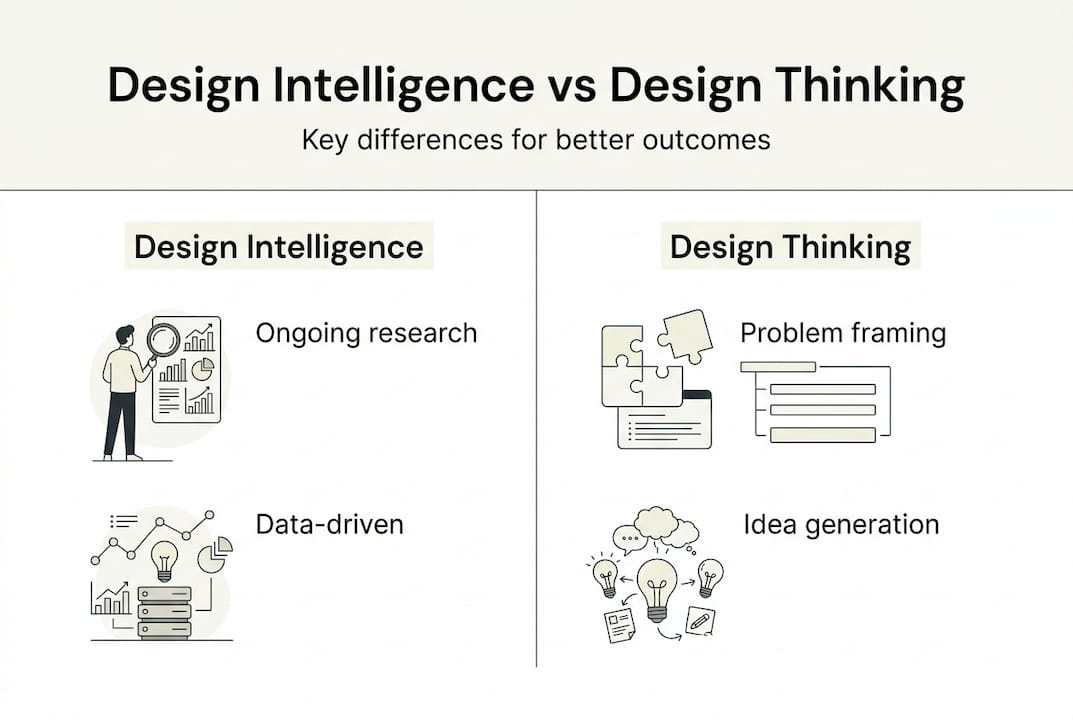
Four core components define design intelligence in practice:
| Component | Traditional design | Design intelligence |
|---|---|---|
| Research role | Front-loaded, often informal | Continuous, peer-reviewed, data-driven |
| Decision basis | Intuition and experience | Evidence and validated findings |
| Ethical scope | Aesthetic appropriateness | Behavior, privacy, inclusivity, bias |
| Outcome measure | Client approval | Measurable user and societal impact |
As articulated in a widely cited perspective on the discipline, design intelligence shifts designers from pixel-crafters to intelligence curators, shaping behaviors, personalities, and ethics over static interfaces. This reframing is not rhetorical. It reflects a structural shift in what professional design work demands.
"The future of design is intelligence, not interfaces. Designers are becoming curators of behavior, ethics, and experience, not just visual form."
For professionals seeking to stay current, tracking daily design intelligence signals is one of the most efficient ways to maintain research fluency without reading full academic papers.
How design intelligence drives better outcomes
The practical value of design intelligence becomes clearest when you examine what happens when it is applied rigorously. Research across UX, industrial design, and health technology consistently shows that evidence-informed design produces stronger, more durable outcomes than intuition-led approaches.
Consider the role of empathy in user-centered design. VR immersion enhances user empathy in design contexts, enabling designers to experience user environments directly and translate those insights into more responsive, context-aware solutions. This is not a soft benefit. It produces measurable improvements in how well a design addresses genuine user needs rather than assumed ones.

In health technology, AI-driven semantic ontologies enhance personalized health recommendations by 30%, demonstrating how structured intelligence frameworks translate directly into performance gains. The design of the recommendation logic, the taxonomy, the interface hierarchy, all of it compounds when grounded in research.
Measurable outcomes associated with design intelligence integration include:
- Increased user empathy: Research-informed personas and immersive testing methods produce designs that reflect real user contexts.
- Behavior change: Evidence-based interaction patterns guide users toward intended actions more reliably than visually driven layouts.
- Engagement improvements: Designs validated through iterative testing sustain attention and reduce friction.
- Operational efficiency: Fewer post-launch revisions are required when decisions are pre-validated against research findings.
- Ethical alignment: Proactive identification of bias and exclusion risks reduces downstream harm and reputational exposure.
Studies examining art's influence on design intelligence further confirm that cross-disciplinary research inputs elevate design quality beyond pure functionality, reinforcing the case for broad intelligence sourcing.
Pro Tip: Integrate intelligence frameworks at project initiation, not just during user testing. Early research alignment reduces costly directional pivots in later phases and produces stronger iterative results throughout the entire project lifecycle.
From static interfaces to shaping behavior and ethics
The implications of design intelligence extend well beyond screen-level decisions. As the discipline matures, it becomes clear that design shapes not only interfaces but also behaviors, personalities, and ethics. This is a significant responsibility, and one that design intelligence frameworks are specifically structured to address.
"Designers are no longer just solving visual problems. They are making decisions that affect how people perceive themselves, relate to others, and navigate the world."
Ethical dilemmas facing design professionals today include:
- Privacy: Designing data collection flows that obscure user consent or normalize surveillance.
- Algorithmic bias: Embedding demographic assumptions into recommendation systems or automated interfaces.
- Dark patterns: Using behavioral psychology to manipulate rather than inform user decisions.
- Accessibility gaps: Producing solutions that exclude users with cognitive, sensory, or motor differences.
- Environmental impact: Specifying materials or production processes without Life Cycle Assessment (LCA) data.
Design intelligence provides the structural means to confront these dilemmas systematically. Sustainability-oriented projects, for instance, apply LCA methodologies to evaluate environmental burden across a product's full lifecycle, from material extraction through end-of-life. Accessibility-focused teams use cognitive load research and inclusive design standards to ensure solutions serve the broadest possible user population.
Research into cultural and historical design traditions, such as studies on indigenous craftsmanship and enduring design narratives, demonstrates how intelligence-informed design honors stakeholder and societal contexts that purely trend-driven approaches routinely overlook. This depth of consideration is what separates intelligence-led design from aesthetics-led design at a professional level.
Practical frameworks for applying design intelligence
Translating design intelligence from principle to practice requires structured workflows. The following framework provides a repeatable, research-grounded approach applicable to digital, physical, and service design contexts.
- Define the intelligence brief. Before any visual or conceptual work begins, identify the research questions your design must answer. What behaviors are you trying to support or change? What ethical risks are present? What existing studies are relevant?
- Source and distill peer-reviewed evidence. Identify validated research relevant to your domain. Platforms that aggregate and structure academic findings reduce the time cost of this step significantly. Tools like design analysis in UX provide structured frameworks for applying research findings to real projects.
- Build research-informed prototypes. Use evidence to drive early design decisions rather than aesthetic preference. Document the research rationale for each key decision so it can be tested and revised.
- Conduct iterative usability testing. Usability testing enhances interactive interface quality at every stage of development, not just pre-launch. Structured testing protocols produce actionable data that refines both function and form.
- Evaluate post-launch and close the loop. One of the most common pitfalls in design practice is treating launch as the endpoint. Post-launch behavioral data, support tickets, and user feedback are primary intelligence inputs for the next iteration.
| Framework element | Primary tool | Key output |
|---|---|---|
| Research sourcing | Academic databases, DesignDex | Evidence brief |
| Prototype validation | Usability testing, A/B testing | Validated design decisions |
| Behavioral analysis | Analytics, session recording | Behavioral insight report |
| Ethical review | Bias audits, LCA, accessibility checks | Risk and compliance log |
| Post-launch iteration | Feedback loops, NPS, heatmaps | Continuous improvement cycle |
For teams working across physical brand touchpoints, the same intelligence framework applies: research informs material selection, ergonomic decisions, and environmental impact assessments with equal rigor.
Pro Tip: Build a formal "design intelligence feedback loop" into every project contract or brief. Specify that post-launch evaluation data feeds directly into the next design cycle. This single structural change elevates the long-term quality of your work more than any single tool or trend.
Why design intelligence is the real disruptor in the creative industry
Most conversations about disruption in design focus on tools: generative AI, parametric modeling, no-code platforms. These are real shifts, but they are surface-level compared to the structural change that design intelligence represents. Tools change. The discipline of grounding decisions in validated evidence does not.
The designers who will define the next decade of the profession are not those who master the latest software. They are those who can curate, interpret, and apply research intelligence to produce outcomes that are defensible, ethical, and measurable. Visual polish is increasingly commoditized. Intelligence curation is not.
Tracking ongoing design trends matters, but only as one input among many. The sustainable differentiator is the capacity to integrate research fluency into every phase of practice, from brief to post-launch evaluation. This is what future-proofs a design career and amplifies professional impact beyond the project level. The shift from interface polish to intelligence curation is not a trend. It is the structural evolution of the discipline.
Take your next step with research-backed design intelligence
The frameworks and findings covered in this article represent a fraction of the peer-reviewed evidence available to design professionals who know where to look.
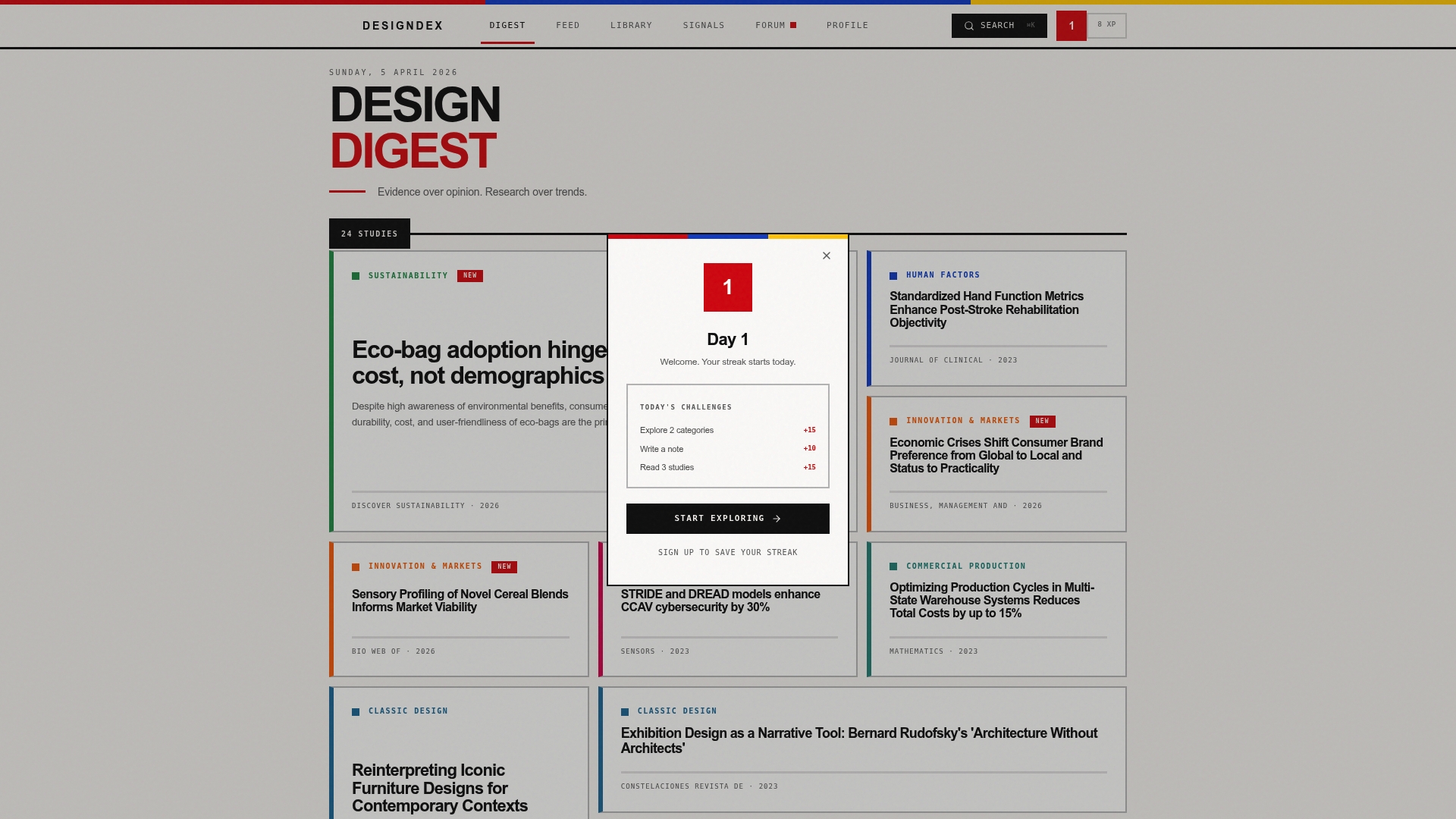
DesignDex distills studies like usability testing research and VR immersion research into structured, citation-ready summaries that update daily. Instead of spending hours with full academic papers, you get the aims, methods, findings, and real-world applications in a format built for professional decision-making. Whether you are justifying a design choice to a client or building a research foundation for a new project, the DesignDex platform provides the intelligence infrastructure your practice needs.
Frequently asked questions
How does design intelligence differ from traditional design thinking?
Design intelligence relies on ongoing data and research to drive decisions continuously, while design thinking focuses primarily on structured creative problem-solving during defined project phases.
Can design intelligence really influence user behavior and ethics?
Yes; research confirms that design directly impacts behavior and ethical standards, as intelligence-informed design choices shape user perceptions, actions, and the broader social context in which products operate.
What is a simple way to start using design intelligence today?
Begin by incorporating usability testing and iterative analysis at every stage of your design process rather than reserving evaluation for the final phase.
Is design intelligence only for digital interfaces?
No; design intelligence offers value across all design domains, including physical products, service design, environmental design, and brand systems, wherever evidence-informed decisions improve outcomes.
Recommended
- Today's Design Digest | DesignDex
- Better design results: why design analysis matters in UX
- Contemporary Art's Influence Elevates Graphic Design Beyond Pure Functionality — Design Research Summary | DesignDex
- Nature's Blueprints: Biomimicry Drives Sustainable Design Innovation — Design Research Summary | DesignDex
- 7 Details Clients Notice First: Micro-Design Elements That Change Perc – BcardsCreation