

Finding the right creative platform can feel a bit overwhelming with so many choices out there. Each tool promises something unique, whether it is fresh design ideas or ways to connect with talented creators. As you look for something that fits your workflow and style, it helps to see what stands out. Some platforms focus on community while others shine in simplicity or wide resource libraries. Curiosity about these options could lead to a solution that surprises you. See what makes these alternatives interesting and discover which one matches your needs best.
Table of Contents
DesignDex
At a Glance
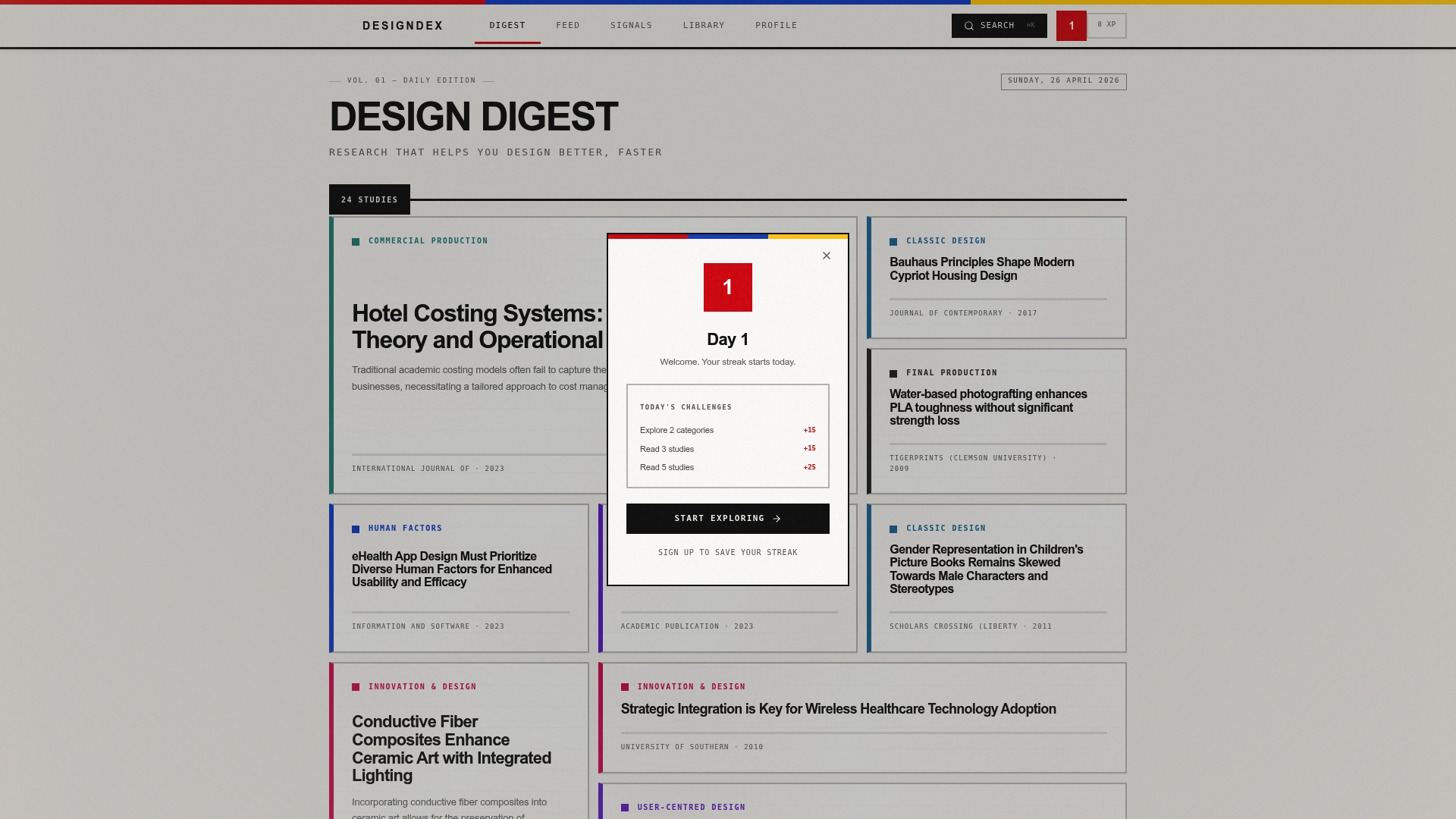
DesignDex is a leading research aggregation and intelligence platform for designers, offering daily updated research from verified sources that helps you design faster with evidence. It turns full papers into concise citation ready summaries so you spend minutes on insights not hours on reading.
Core Features
Core features include daily updates, categorized studies across classic design, innovation, and human factors, and curated research that links directly to verified sources. The platform delivers structured breakdowns of aims, methods, findings, and practical applications to make research immediately actionable for projects.
Pros
- Comprehensive collection of current research articles. The library gathers recent studies across multiple design disciplines so you rarely miss important findings.
- Categories tailored to design disciplines. The site organizes research into clear topics which speeds discovery for focused inquiries.
- Free access to reputable sources. Researchers and students get no cost access to primary references that support evidence based design.
- Supports research and development efforts. DesignDex supplies the citations and summaries teams need to justify design decisions to stakeholders.
- User friendly interface with quick navigation. The minimal design makes scanning and linking to original studies fast and predictable.
Who It's For
DesignDex is built for Designers, Researchers, Students, and Academics who need reliable, up to date evidence to inform design choices and teach methodology. It also fits product teams and UX researchers who require citation ready references during pitch preparation and design reviews.
Unique Value Proposition
DesignDex acts as a decision support tool that ingests and distills peer reviewed studies into concise, citation ready content that teams can use immediately. Its daily surfacing of trends and curated signals gives sophisticated buyers a defensible research pipeline rather than piecemeal articles.
Real World Use Case
A product designer uses DesignDex to locate recent work on smart spaces and IoT interactions, then applies the methods and findings to prototype sensor placements and interaction flows, shortening validation cycles and strengthening design rationale for stakeholders.
Pricing
Pricing is Free which removes barriers for students and small teams that need high quality references and curated research without subscription costs.
Website: https://designdex.org
HeyDesigner
At a Glance
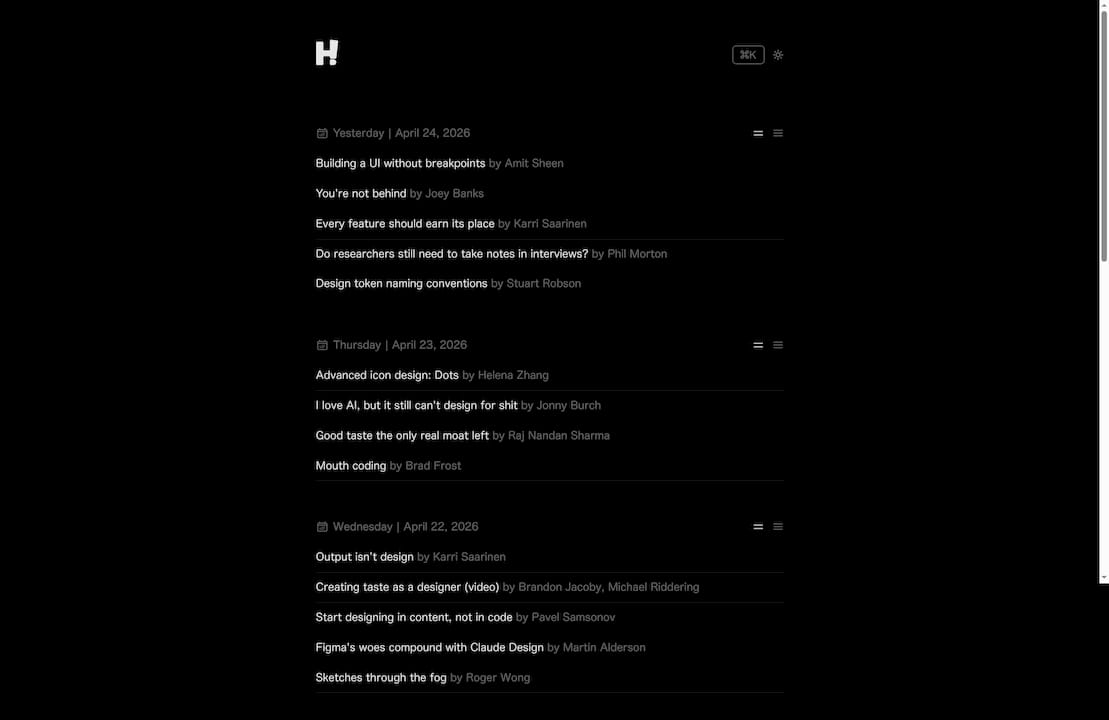
HeyDesigner is a focused, weekly newsletter that curates design links and tools for product people, UXers, PMs, and design engineers. It works well as a lightweight discovery feed for busy teams but offers limited interactivity beyond curated links.
Core Features
HeyDesigner centers on weekly curated design links and resources with an accessible archive of past issues. The newsletter supports categories and tags, and provides multiple ways to follow content through social and RSS channels, plus sponsored content options for visibility.
Pros
-
Curated and current content. The newsletter delivers relevant links and resources each week so you spend less time hunting for useful articles and tools.
-
Multiple engagement channels. Readers can subscribe by email, follow on social media, or use RSS which makes it flexible for different workflows.
-
Practical topic focus. The selections favor actionable UI and product design ideas that design teams can test or reference quickly.
-
Tool discovery included. Issues regularly include links to tools and resources that help designers and product teams evaluate new options.
Cons
-
Limited interactivity. The product functions mainly as a one way content feed and does not provide discussion, collaboration, or native community features.
-
Relies on external content. Most value comes from links to third party articles and tools rather than original long form essays or proprietary research.
-
Basic design and feature set. The offering is newsletter centric with minimal additional features for team workflows or deeper content curation.
Who It's For
Designers, Product Managers, UX UI Professionals, and Developers who need a concise weekly signal about tools and trending topics will find HeyDesigner useful. It fits people who prefer curated link lists over long form reading and who value time efficient discovery.
Unique Value Proposition
HeyDesigner saves time by collecting relevant design links in a single weekly issue so you do not miss practical reads and new tools. Its straightforward archive and tag system make it easy to revisit past recommendations when planning a project or research sprint.
Real World Use Case
A product team uses HeyDesigner to seed their weekly design standup with fresh links and examples. Team members skim the issue, bookmark promising tools, and bring one or two items into sprint planning as inspiration or experiment candidates.
Pricing
Free subscription available through the newsletter sign up. There is no paid tier listed and subscribing is the primary access method for regular updates.
Website: https://heydesigner.com
Sidebar.io
At a Glance
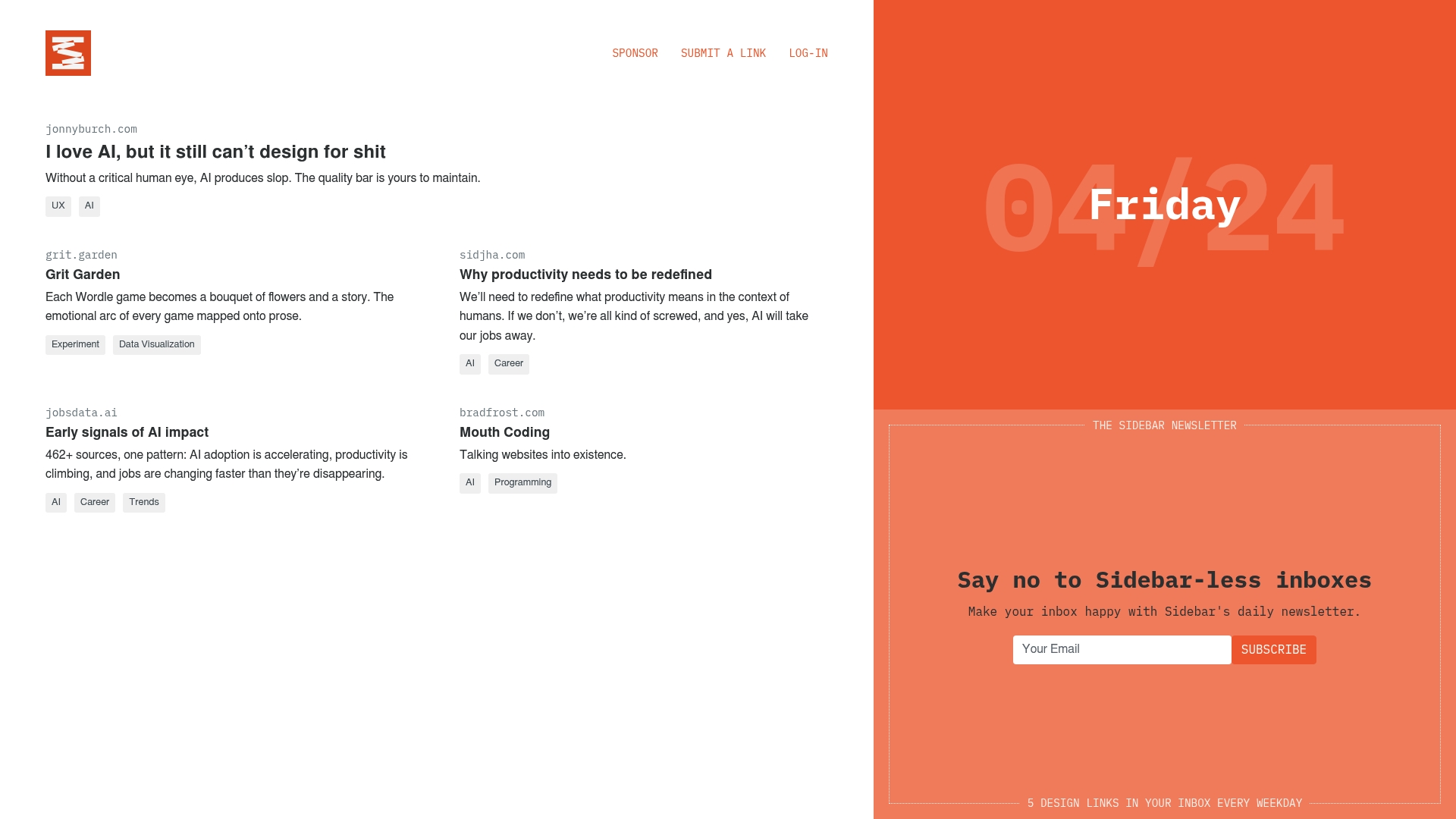
Sidebar.io delivers the five best design links every weekday, packaged into a concise, easy to scan format that saves time for busy designers and developers. The site and newsletter act as a lightweight discovery engine for UX, AI, data visualization, and programming topics.
Sidebar.io is strongest when you need focused daily inspiration rather than exhaustive coverage. The trade off is depth for signal.
Core Features
Sidebar.io centers on a daily curated design links newsletter that highlights five top links each weekday. The platform organizes content into categories like UX, AI, and Data Visualization, provides an archives section for browsing past selections, and accepts user submissions to surface community finds.
Sponsored content and advertising opportunities are supported, which helps sustain curation while offering brands a channel to reach design and tech audiences.
Pros
-
Curated content saves time for users by filtering noise and delivering only five high quality links each day. This reduces research overhead for designers balancing project work.
-
Diverse topical range spans UX, AI, programming, and data visualization which makes the feed relevant to multidisciplinary teams and students. It keeps design thinking connected to adjacent technical trends.
-
Regular updates keep users informed because the weekday cadence creates a dependable habit of receiving fresh material every business day. That consistency supports ongoing learning.
-
Newsletter subscription delivers links directly to the inbox which removes friction and increases the chance the content is seen and acted on during a workday.
-
User submission feature encourages community engagement by allowing practitioners to nominate interesting work, tutorials, and critiques for curation.
Cons
-
Limited to top five links per day, which may omit other interesting content and can leave gaps for niche topics that deserve attention on a given day.
-
Dependent on the quality of external links and sources because the platform curates rather than creates original analysis, so value varies with what appears on the web that day.
-
Website design is simple and may lack advanced interactive features which reduces exploration depth for users who prefer richer on site filtering or inline commentary.
Who It's For
Sidebar.io is ideal for Designers, UX Professionals, Developers, and Tech Enthusiasts who want a daily, low friction feed of high quality links. Students and content creators benefit when they need curated examples or timely references without hours of searching.
Unique Value Proposition
Sidebar.io stands out by offering a minimal daily digest that trades volume for quality. The combination of a weekday cadence, topical categories, and community submissions creates a reliable signal stream for professionals who value time and focus.
Real World Use Case
A UX Designer subscribes to Sidebar.io and opens the newsletter each morning to collect inspiration and citations for sprint planning and design critiques. The designer bookmarks one tutorial and forwards another to a teammate as a quick reference.
Pricing
Free to access and free to subscribe to the newsletter. Link submissions are free while sponsored placements are available for organizations seeking paid exposure.
Website: https://sidebar.io
Design Tools Comparison
Explore the comparison of three distinct design tools to analyze their suitability for your professional requirements.
| Tool | Core Features | Pros | Cons | Pricing |
|---|---|---|---|---|
| DesignDex | Daily research updates, categorized studies, citation-ready summaries for design disciplines | Comprehensive research collection,<br>Categories aid focused searches,<br>Free access to sources | Limited to research articles only,<br>May require familiarity with academic content for optimal usage | Free |
| HeyDesigner | Weekly curated design links, multiple engagement platforms (social, RSS), includes design tool discoveries and tags | Relevant and actionable content,<br>Flexible subscription options,<br>Includes tool suggestions | Basic features,<br>No interactivity or collaboration tools,<br>External link dependency | Free subscription |
| Sidebar.io | Daily top five design links, topical categories (UX, AI, etc.), user submissions | Saves time with daily concise updates,<br>Diverse topics bridging design and tech,<br>User participation | Limited curated content volume,<br>Dependent on third-party link quality,<br>Simple website design | Free |
Discover Smarter Design Decisions with Research-Backed Insights
Struggling to find reliable alternatives to todayin.design that offer evidence-based insights rather than just curated links This challenge of validating design choices with solid research is exactly what many designers face when seeking trustworthy resources. DesignDex answers this need by delivering daily updated, peer-reviewed studies with clear summaries covering aims, methods, and real-world applications that save you hours of reading and guesswork.
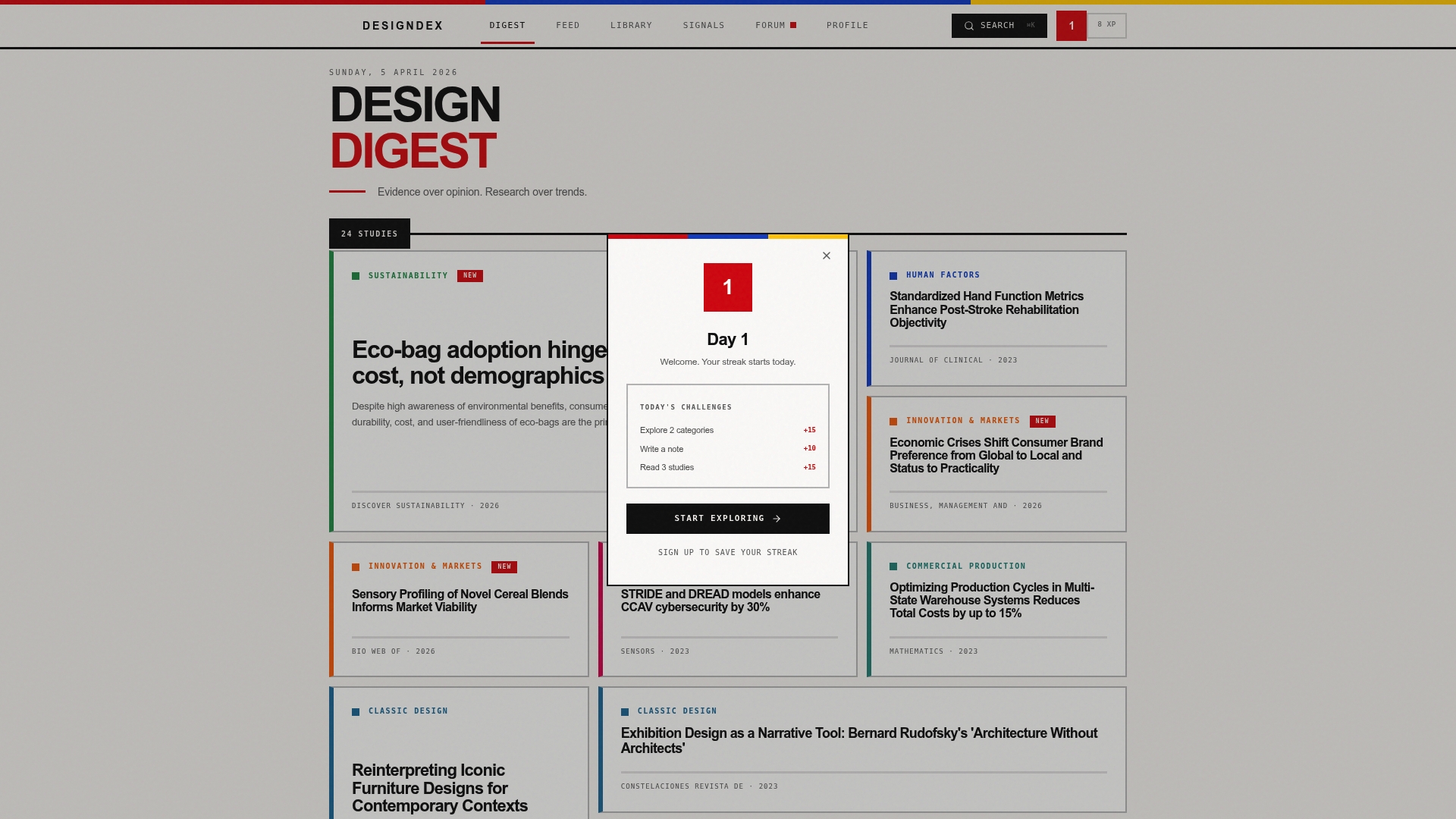
Explore how DesignDex can transform your workflow with citation-ready content that supports your design rationale and innovation efforts. Don’t wait to empower your projects with actionable evidence. Visit DesignDex today for a streamlined research experience designed specifically for designers who demand more than surface-level content.
Frequently Asked Questions
What are the key features of the top alternatives to todayin.design for 2026?
The top alternatives offer varied features including daily design links, curated research, and user-friendly interfaces. Explore features like categorized studies and community submissions to enhance your design workflow.
How do the alternatives help streamline my design research process?
These alternatives simplify the research process by providing concise summaries and curated links to relevant studies. Sign up for daily or weekly newsletters to receive curated content directly in your inbox, making it easier to access key insights without spending hours searching.
Can I contribute to the content in the alternatives?
Yes, many platforms allow user submissions to curate content from the community. Consider sharing valuable links or resources you find to engage with other designers and contribute to the collective knowledge.
How can I effectively use these alternatives in my design projects?
Utilize the curated content to stay updated on industry trends and gather inspiration for your projects. Set aside specific time each week, such as during team standups, to discuss insights you’ve gathered for practical applications in your designs.
Are there any costs associated with using these alternatives?
Most of the top alternatives offer free access, which makes them very accessible for students and small teams. Check for any paid features that may be available if you want enhanced capabilities or visibility options.